Have you ever felt stuck in the endless loop of studying for years just to earn a degree?
Or maybe you’ve been dreaming about getting a full bachelor’s degree, but the thought of spending four years—or even more—makes you want to give up before starting.
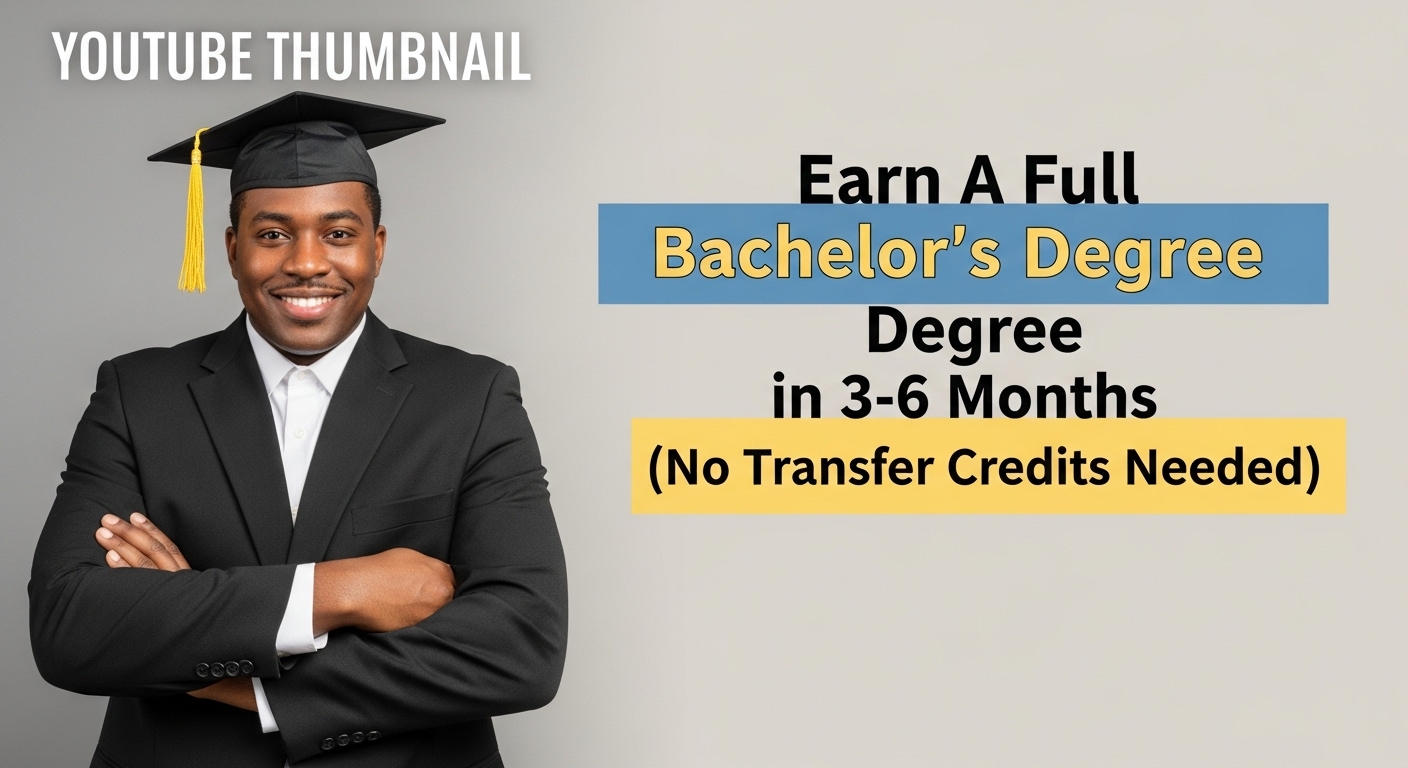
What if I told you there’s a way to earn a complete bachelor’s degree in just 3 to 6 months… without transferring credits from another university?
Yes, you read that right. Three to six months.
No transfer credits. No wasting years. No endless tuition payments.
In this blog post, I’m going to break down exactly how this works, who it’s for, and why it might be the fastest way to kickstart your career. Think of it like a shortcut, but fully legitimate.
Why Traditional Bachelor’s Degrees Take So Long
Before we jump into the fast-track option, let’s understand why most bachelor’s degrees take 3–4 years—or even longer.
Most universities structure their programs like this:
The system is designed for paced learning, but it doesn’t account for people who already have knowledge, skills, or experience.
Plus, you spend a lot of time on general education courses—subjects that may not even relate to your career goals.
The Problem: Time and Money
Here’s the harsh truth:
No wonder so many people feel frustrated or stuck.
But what if there was a faster, smarter alternative?
Fast-Track Bachelor’s Programs: How They Work
Some universities now offer accelerated programs that allow you to complete a full bachelor’s degree in as little as 3–6 months.
Here’s how:
1. Prior Learning & Experience Count
Instead of starting from scratch, these programs recognize:
They call it competency-based education (CBE).
Think of it like a video game—you already know how to play. Now, you just prove your skills and move to the next level quickly.
2. Self-Paced Learning
In accelerated programs, you’re not bound by semester schedules.
You can study full-time or part-time, depending on your availability.
Some students complete entire modules in weeks, while traditional universities take months.
It’s like running a race at your own speed instead of waiting for the starting gun each semester.
3. Online & Flexible Formats
Most fast-track programs are fully online.
This means you can study from home, a coffee shop, or even while traveling.
You don’t need to relocate, and you can continue working while earning your degree.
4. Focused Curriculum
Unlike traditional degrees, accelerated programs skip unnecessary electives.
Every course is designed to teach you skills you’ll actually use in your career.
It’s practical, straight to the point, and career-focused.
Who Should Consider a 3–6 Month Bachelor’s Degree?
Fast-track bachelor’s degrees aren’t for everyone. But they’re perfect for:
The Benefits of a Fast-Track Bachelor’s Degree
Let’s be honest—completing a degree in months instead of years has huge advantages.
1. Save Time
Instead of 3–4 years, you finish in months.
That’s time you can spend working, starting a business, or traveling.
2. Save Money
Tuition is lower because you pay for fewer semesters.
Plus, you avoid extra living expenses.
3. Career Advancement
Employers value degrees, especially when paired with experience.
You can earn promotions faster with your newly-accredited degree.
4. Immediate Results
In 6 months, you can apply for jobs that required a bachelor’s degree, instead of waiting years.
5. Flexibility
Most programs are online and self-paced.
You control your schedule.
Common Concerns About Fast-Track Degrees
Some people worry that accelerated degrees are “less legitimate.”
Here’s the truth:
It’s not a shortcut in the sense of “cheating.”
It’s a smarter way to get what you need faster.
How Long Does It Really Take?
Some programs promise 3–6 months, but here’s what it depends on:
A motivated student can complete modules in weeks, but others may take a little longer.
The important thing is: you control your timeline.
What Fields Can You Study in Accelerated Programs?
Fast-track bachelor’s degrees are available in many areas, including:
If you’ve been thinking about a field change or a career upgrade, this is your chance.
Real-Life Example: How Fast-Track Changed a Career
Let me tell you about Alex, a friend who had years of experience in digital marketing but never completed a degree.
He wanted a bachelor’s to get higher-paying jobs and credibility. Traditional degrees would have taken 3–4 years.
He enrolled in an accelerated online program.
Within two months of graduating, he landed a management role in a tech company, earning double his previous salary.
His secret? He applied knowledge from years of experience, proved his competencies, and completed the degree fast.
Step-by-Step Guide to Get a Fast-Track Bachelor’s Degree
Here’s how you can do it:
Step 1: Choose a Program
Look for accredited universities that offer accelerated or competency-based bachelor’s programs.
Step 2: Check Eligibility
Most programs require high school completion or equivalent.
Some may ask for professional experience.
Step 3: Prepare Documentation
Step 4: Submit Application
Apply online. Most programs have rolling admissions.
Step 5: Begin Study Modules
Modules may last 1–4 weeks.
Work at your own pace and demonstrate competency.
Step 6: Complete Assessments
Instead of long exams, some programs use projects or practical assessments.
Show what you know.
Step 7: Graduate
Receive your full bachelor’s degree within months.
Tips to Succeed in an Accelerated Program
Why This Is a Game-Changer for 2026
The world is moving fast.
Employers want results, not years of wasted study.
Accelerated bachelor’s programs allow you to:
It’s the ultimate shortcut without cheating.
Final Thoughts
Earning a full bachelor’s degree in 3–6 months may sound too good to be true, but it’s real.
It’s not just a degree.
It’s a passport to career opportunities, higher income, and credibility—all while saving time and money.
If you’re ready to stop waiting and start fast-tracking your future, now is the time.
Three to six months from now, you could have a full bachelor’s degree in your hand—without years of stress or financial strain.
The question is… are you ready to take that leap?