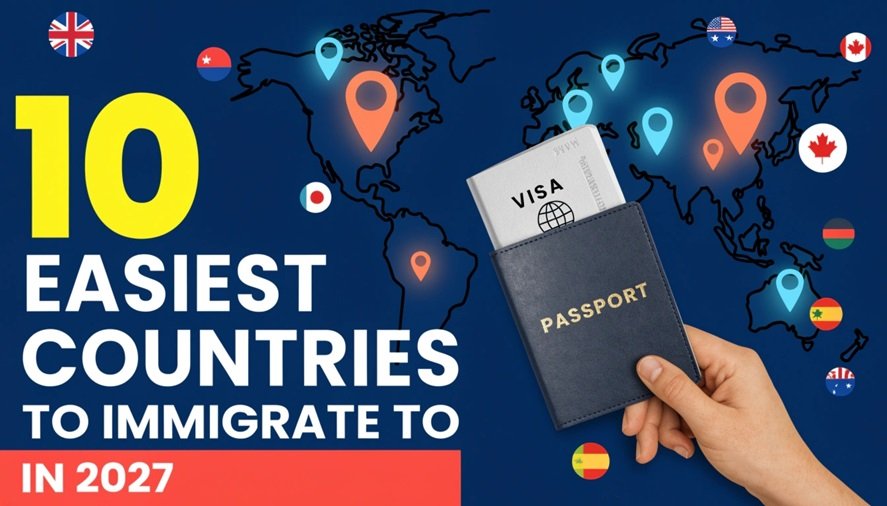
Are you planning to leave your home country and start a new life abroad in 2027? Are you looking for a country where you can legally work, study, relocate with your family and eventually obtain permanent residence?
Immigration opportunities continue to attract people from Ghana, Nigeria, Kenya, Uganda, South Africa and other African countries. However, choosing the right destination can be challenging because every country has different visa requirements, financial conditions and immigration policies.
The good news is that several countries offer established immigration pathways for skilled workers, professionals, international graduates, entrepreneurs and people with qualifying foreign income.
In this guide, OWAFK Africa presents 10 countries worth considering for immigration in 2027, including their main immigration pathways, eligibility considerations and official government application links.
Before we begin, remember that there is no country where immigration is automatically easy for everyone. Your qualifications, age, occupation, work experience, language ability, finances and family circumstances will influence your options.
The countries below are not an official ranking. They are selected because they offer identifiable legal pathways that applicants can investigate.
1. Germany 🇩🇪
Germany is one of the European countries worth considering if you have professional qualifications, vocational training or experience in an occupation where employers need skilled workers.
The country has introduced several immigration reforms to attract qualified workers from outside the European Union.
One important pathway is the Opportunity Card (Chancenkarte).
This residence permit allows eligible applicants to travel to Germany to search for employment without first having a permanent job offer.
Depending on your qualifications and circumstances, you may qualify through recognition of your professional qualifications or the points-based route.
Other immigration options include:
Who should consider Germany?
You should also consider learning German. Although some international companies operate in English, German language ability can significantly improve your employment opportunities.
Official immigration links:
2. Canada 🇨🇦
Canada remains an important destination for skilled workers and families seeking long-term settlement opportunities.
The country operates several immigration programmes that allow qualified foreign nationals to apply for permanent residence.
One of the most recognised routes is Express Entry.
Express Entry manages applications under three major economic immigration programmes:
Applicants are assessed using factors such as age, education, language ability and work experience. Candidates who receive invitations can proceed with permanent residence applications.
Canada also operates the Provincial Nominee Program (PNP), which allows provinces and territories to nominate eligible applicants according to their economic and labour-market needs.
Other pathways worth investigating include:
Who should consider Canada?
Canada is not necessarily an easy destination for everyone. Competition for invitations, provincial requirements and changing immigration targets can affect your chances.
Official immigration links:
3. Australia 🇦🇺
Australia offers skilled migration opportunities to qualified foreign professionals, including applicants from African countries.
Its immigration system includes points-tested visas, employer-sponsored visas and regional migration programmes.
One major pathway is the Skilled Independent Visa (Subclass 189), which allows eligible invited workers to live and work permanently in Australia.
Other options include:
For points-tested skilled visas, applicants generally need to submit an Expression of Interest through SkillSelect.
Factors considered can include age, qualifications, work experience and English language ability.
Meeting the minimum points threshold does not guarantee an invitation.
Who should consider Australia?
Applicants should check whether their occupation is eligible, whether a skills assessment is required and whether they can meet the relevant points or employer-sponsorship conditions.
Official immigration links:
4. New Zealand 🇳🇿
New Zealand is another destination worth investigating if you have professional qualifications, relevant work experience and an employer willing to recruit you.
One of its main employment pathways is the Accredited Employer Work Visa (AEWV).
To qualify, applicants generally need a full-time job offer from an accredited employer, together with the required skills, experience, qualifications and other conditions.
New Zealand also offers a Skilled Migrant Category Resident Visa for eligible skilled workers who meet its requirements.
Other pathways include:
Who should consider New Zealand?
Before applying, check whether the employer is accredited and whether the job meets the requirements of the visa.
A job offer from an ordinary employer does not automatically qualify you for an AEWV.
Official immigration links:
5. Ireland 🇮🇪
Ireland is an attractive option for people who want to work in an English-speaking European country.
The country operates employment permit programmes that allow eligible non-European workers to take up employment with Irish employers.
One important pathway is the Critical Skills Employment Permit.
It is designed to attract workers with qualifications and experience in occupations where Ireland has identified skills shortages.
Another option is the General Employment Permit, which covers a broader range of eligible occupations, subject to its conditions.
Potential sectors to investigate include:
The Critical Skills Occupations List is particularly important because it identifies the occupations that may qualify for the permit.
A qualifying job offer and the applicable salary and employment conditions are essential.
Who should consider Ireland?
Official immigration links:
6. Austria 🇦🇹
Austria offers immigration opportunities through its Red-White-Red Card system.
This programme is designed for qualified workers, highly skilled professionals and certain other categories of foreign nationals.
Depending on your qualifications and circumstances, you may qualify under one of several categories.
These include:
One interesting option is the Job Seeker Visa for very highly qualified workers.
Eligible applicants who achieve the required points can obtain permission to travel to Austria for up to six months to search for suitable employment.
However, this route is not available to every foreign job seeker.
Who should consider Austria?
German language ability can improve your employment prospects, although the requirements depend on the specific immigration category and occupation.
Official immigration links:
7. Portugal 🇵🇹
Portugal is a country worth considering if you have a qualifying employment offer, professional skills or sufficient foreign income from remote work.
The country offers different residence visa options depending on the applicant’s purpose of relocation.
Some important pathways include:
The Digital Nomad route is particularly relevant to people who work remotely for employers or clients outside Portugal and can satisfy the applicable income and documentation requirements.
For employment-based immigration, applicants generally need the appropriate employment contract or qualifying job offer.
Portugal also has a route to long-term residence after a period of qualifying legal residence, subject to the applicable conditions.
Who should consider Portugal?
Do not confuse obtaining a temporary residence visa with automatically receiving permanent residence or citizenship.
Official immigration links:
8. Spain 🇪🇸
Spain offers several legal immigration routes for foreign professionals, workers, entrepreneurs and remote employees.
One particularly interesting option is the International Teleworking Visa, commonly associated with Spain’s Digital Nomad Visa.
This pathway is designed for eligible people who work remotely for companies or clients located outside Spain, subject to the programme’s conditions.
Other pathways include:
Applicants using the remote-working pathway must satisfy the relevant professional, employment, income and documentation requirements.
For ordinary employment, a suitable job offer and the appropriate work and residence authorisation are generally required.
Who should consider Spain?
Spanish language skills can be valuable for employment and everyday life, although some international companies operate in English.
Official immigration links:
9. Sweden 🇸🇪
Sweden offers employment-based immigration opportunities for qualified foreign workers.
If you secure a genuine job offer from a Swedish employer and meet the relevant requirements, you may be able to apply for a Swedish work permit.
The country also has residence permit options for certain highly qualified individuals who want to explore employment or business opportunities.
Main routes worth investigating include:
Applicants must pay particular attention to salary requirements, insurance, employment conditions and the employer’s obligations.
Under the rules in force in November 2026, the general work-permit salary threshold is SEK 34,470 per month, subject to applicable exemptions and the rules in force when the application is submitted.
Who should consider Sweden?
English is widely used in some international workplaces, but Swedish language skills can improve your employment prospects.
Official immigration links:
10. Finland 🇫🇮
Finland is another European country worth exploring if you have professional qualifications, relevant work experience or an employment opportunity with a Finnish employer.
The country offers residence permits for employed persons, specialists, researchers, entrepreneurs and certain other categories.
Some important routes include:
The Specialist Residence Permit may be relevant to highly qualified professionals who have secured suitable employment and meet the salary and qualification requirements.
Applicants should investigate the Finnish labour market and identify employers recruiting internationally.
Who should consider Finland?
English is used in many international workplaces, especially in technology and research, but learning Finnish or Swedish can help with integration and employment opportunities.
Official immigration links:
Which Country Is Best for Africans Who Want to Immigrate in 2027?
There is no single country that is easiest for every applicant. Your best option depends on your qualifications, occupation, financial situation and preferred immigration route.
Here is a practical comparison:
Country | Main pathway to investigate | Best suited to |
Germany | Opportunity Card and skilled-worker visas | Qualified workers and vocational professionals |
Canada | Express Entry and Provincial Nominee Program | Skilled workers and tradespeople |
Australia | Skilled Independent and State Nominated visas | Applicants with eligible occupations and competitive points |
New Zealand | Accredited Employer Work Visa | Applicants with qualifying job offers |
Ireland | Critical Skills Employment Permit | Professionals in eligible occupations |
Austria | Red-White-Red Card | Qualified and highly skilled workers |
Portugal | Employment and Digital Nomad residence visas | Workers and eligible remote-income earners |
Spain | International Teleworking and skilled-worker routes | Remote workers and qualified professionals |
Sweden | Employer-sponsored work permit | Workers with qualifying employment offers |
Finland | Specialist and employed-person permits | Qualified professionals and specialists |
Which Countries Allow You to Move with Your Family?
Family relocation is an important consideration when choosing a destination.
Several countries offer family reunification or dependant residence options for eligible workers and residents.
However, the rules differ.
Always check the family rules before accepting a job or paying for an immigration application.
What Documents Do You Generally Need to Immigrate?
Although each country has its own requirements, many employment-based immigration applications require some of the following documents:
Some countries require foreign qualifications to be assessed or recognised before an applicant can work in a regulated profession.
Do not assume that a qualification accepted in Ghana or Nigeria will automatically be accepted for professional registration abroad.
How to Improve Your Chances of Immigrating in 2027
If you are serious about relocating, consider the following steps.
1. Choose a country based on your qualifications.
Do not select a destination simply because someone on social media claims that it is easy to enter.
2. Research occupations in demand.
Look for official shortage-occupation lists, skilled migration programmes and designated employers.
3. Improve your language skills.
English, German, French, Spanish or other language skills can influence your employment and immigration opportunities.
4. Prepare your documents early.
Obtain your academic certificates, employment references, police clearance and other supporting documents.
5. Check qualification recognition.
Nurses, teachers, engineers, electricians and other regulated professionals may need additional registration or assessment.
6. Use official government websites.
Always check immigration requirements directly with the relevant government authority.
7. Avoid fake visa sponsorship offers.
No genuine agent or recruiter can guarantee that a government will approve your immigration application.
Frequently Asked Questions
1. Which country is easiest to immigrate to from Ghana in 2027?
There is no universal answer. Germany may be worth exploring for qualified workers through the Opportunity Card, while Canada offers skilled-worker and provincial pathways. Portugal and Spain may suit eligible remote workers with sufficient foreign income. Your personal circumstances determine which route is realistic.
2. Can I immigrate without a job offer?
Some pathways do not require a job offer before applying. Examples include Germany’s Opportunity Card and certain points-tested skilled migration programmes in Canada and Australia. However, these routes still have eligibility, financial and selection requirements.
3. Which countries offer permanent residence?
Canada and Australia have direct permanent residence visa options for eligible applicants. Other countries, including Germany, Portugal, Spain, Sweden and Finland, have routes to longer-term or permanent residence after meeting the relevant legal residence and other requirements.
4. Can I relocate with my spouse and children?
Many countries allow eligible workers or residents to bring qualifying family members. However, income, accommodation, visa category and family eligibility requirements may apply.
5. Can I immigrate without IELTS?
Some immigration routes accept other approved language tests or do not require IELTS specifically. However, this does not mean that applicants are automatically exempt from language requirements. Check the exact test and language conditions for your chosen programme.
6. Is visa sponsorship the same as permanent residence?
No. Employer sponsorship generally supports an application for permission to work and live in a country. Permanent residence may require a separate application and additional eligibility conditions.
Final Thoughts
Immigrating abroad in 2027 is possible through several legal pathways, but choosing the right destination is essential.
Germany, Canada, Australia, New Zealand, Ireland, Austria, Portugal, Spain, Sweden and Finland all offer established routes for different categories of foreign applicants.
Some are more suitable for skilled professionals, while others provide options for remote workers, entrepreneurs or people with qualifying employment offers.
The best strategy is to identify the immigration programme that matches your qualifications, occupation, finances and long-term goals.
Do not pay anyone for a guaranteed visa, job offer or permanent residence approval. Always verify the requirements through official government websites.
OWAFK Africa wants to hear from you!
Which country would you like to immigrate to in 2027? Are you applying from Ghana, Nigeria, Kenya, Uganda, South Africa or another African country?
Tell us your country, qualification and profession in the comments.
For more international job opportunities, scholarships, visa sponsorship information and immigration guides, visit: