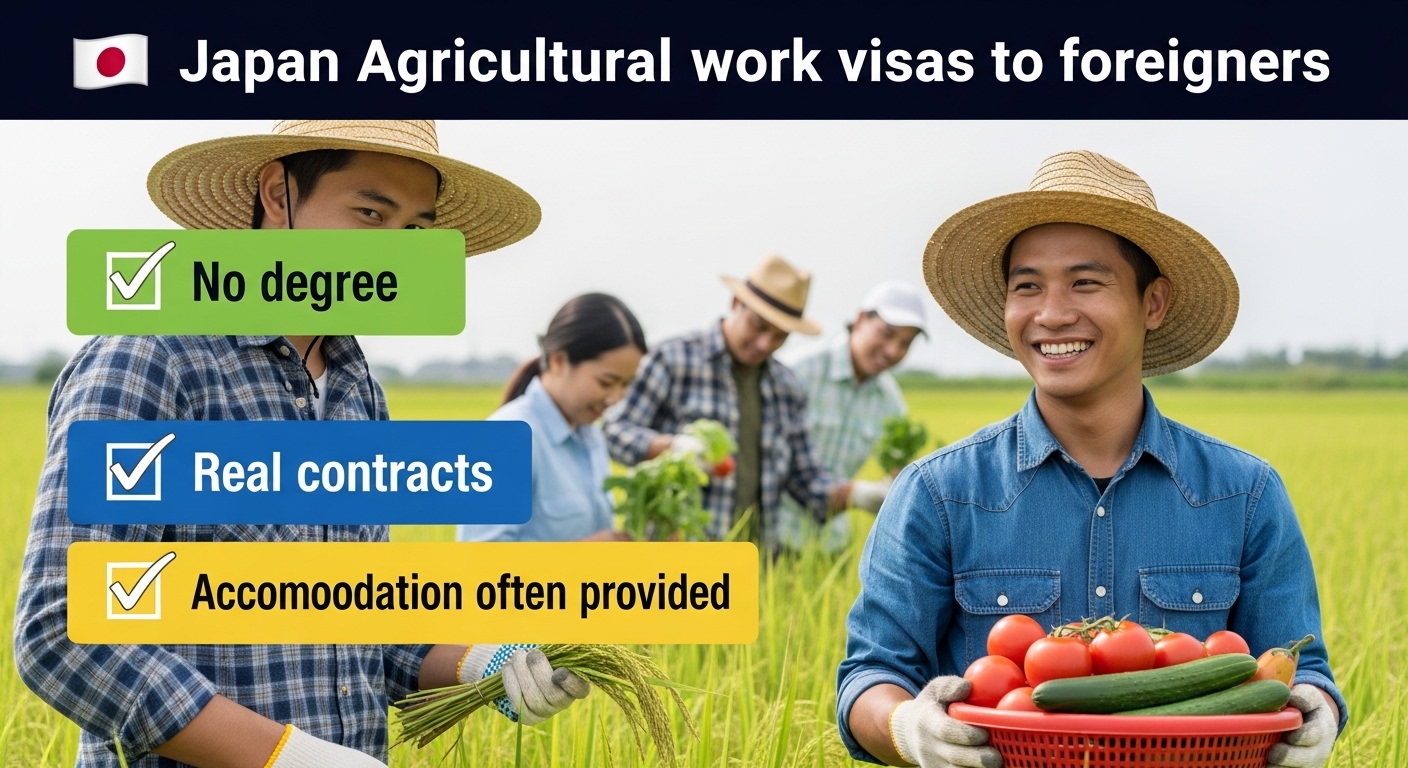
Japan may not be the first country you think of when it comes to agricultural jobs abroad — but in 2026, its farming sector is quietly opening doors for Africans and other non-degree workers to come, work, and earn with real work visas.
With a shrinking local workforce and rising demand for food production, Japan is offering structured programs that let people with practical skills, basic Japanese, and physical stamina work legally in farm fields, greenhouses, and livestock operations — even without a university degree.
Let’s break down how this works, why it’s happening, and how you can realistically take advantage of it.
🇯🇵 Why Japan Needs Foreign Agricultural Workers
Japan’s farms are facing a serious labor shortage:
✔ Young Japanese workers avoid farm jobs
✔ Rural communities are shrinking
✔ Mechanization can’t replace human labor in many tasks
So the government created a visa category designed to bring foreign workers legally into agriculture and other sectors with labor shortages — the Specified Skilled Worker (SSW) visa.
🌾 What Is the Specified Skilled Worker Visa (SSW) in Agriculture?
The SSW (Specified Skilled Worker) visa is a legal work visa for foreign workers in industries that lack domestic labor — including agriculture.
✨ Key Things You Should Know
No Degree Required
This visa does NOT require a university degree. What matters is practical ability to do the farming job and passing required skill and language tests.
Work Scope
You can work in:
Skill & Language Requirements
To qualify, you typically must:
✔ Pass the Agriculture Skill Assessment Test
✔ Pass a basic Japanese language test (JFT-Basic or JLPT N4)
✔ Have a job offer from a Japanese farm or employer
Note: If you’ve completed Japan’s Technical Intern Training Program (TITP) in agriculture, you may be exempt from one or both tests.
Visa Duration
🤝 Who Can Apply (Including Africans)
This pathway is open to workers from countries with diplomatic ties to Japan. There’s no requirement for a degree — just:
✅ You’re at least 18 years old
✅ Good physical health
✅ Pass the required skill and language tests
✅ Have a job offer in Japan in agriculture
This makes it very accessible for people from Africa with practical experience — for instance:
• Farm workers
• Manual laborers
• Livestock helpers
• Horticulture assistants — even without formal education
📋 How the Process Works (Step-By-Step)
Ready for a realistic roadmap? Here’s exactly how to get started:
1. Learn Basic Japanese
You’ll need at least JLPT N4 or pass JFT-Basic to qualify — not a university-level language, but enough to understand workplace instructions. ssw.go.jp
2. Pass the Agriculture Skills Test
Japan uses a skills assessment exam specific to agriculture:
✔ Written questions
✔ Practical tasks related to farming
Passing shows you can do the job safely and professionally. ssw.go.jp
3. Find a Japanese Employer Who Will Sponsor You
You need a formal job offer and employment contract before you apply for the visa.
Employers apply for your Certificate of Eligibility (COE) before you file your visa. ssw.go.jp
Tips for finding employers:
4. Apply for the Visa at the Japanese Embassy/Consulate
Once your COE is approved:
✔ Submit your documents
✔ Attend any required appointments
✔ Receive your SSW visa
Then fly to Japan and start work.
💰 What You Can Expect to Earn
Salary depends on region and job, but typical figures for agricultural SSW workers are:
🌾 Entry-level farm worker: ~¥170,000 – ¥230,000 per month (~$1,000–$1,500 USD)
🌾 Experienced or specialized roles: ¥250,000+ per month (~$1,600+ USD)
Many employers also offer accommodation and meals at low cost or included, boosting your savings.
📍 Regions Where Jobs Are Most Available
Foreign agricultural workers are usually found in rural prefectures with active farming:
📌 Hokkaido (vegetables, dairy)
📌 Tohoku region (rice, apples)
📌 Kyushu (vegetables, tea)
📌 Nagano (fruit and vegetable farms)
🌟 How This Is Different From Other Visas
Some people try to come on a tourist or working holiday visa to work informally — but that’s not legal for actual paid work in Japan. For stable, legal employment, only visas like SSW or TITP (and soon successor programs) are valid.
📌 Common Misunderstandings
❌ “You need a degree to work farms in Japan.” — Not true for SSW agriculture. ssw.go.jp
❌ “Only big cities hire foreigners.” — Japan’s countryside needs workers too.
❌ “Language isn’t required.” — You do need basic Japanese for safety and communication. ssw.go.jp
🔍 Pro Tips for Africans
👉 Study JFT-Basic or JLPT N4 — employers prefer it. ssw.go.jp
👉 Target farms with housing support — many offer shared dorms. JoBins Global Media
👉 Reach out to Hello Work offices in Japan for foreign job placement assistance. quickjobsjapan.com
👉 Connect with agriculture cooperatives that specialize in international hires. Reddit
🧭 Is This a Good Pathway for Africans in 2026?
Yes — because:
✔ No degree required
✔ Practical, in-demand jobs
✔ Legally backed by Japan’s immigration system
✔ Clear steps and testing criteria
✔ Potential to stay up to five years (and longer with Category 2)
If you’re willing to learn some Japanese and commit to real work, Japan’s agricultural boom could be one of the most underrated global opportunities for Africans right now.