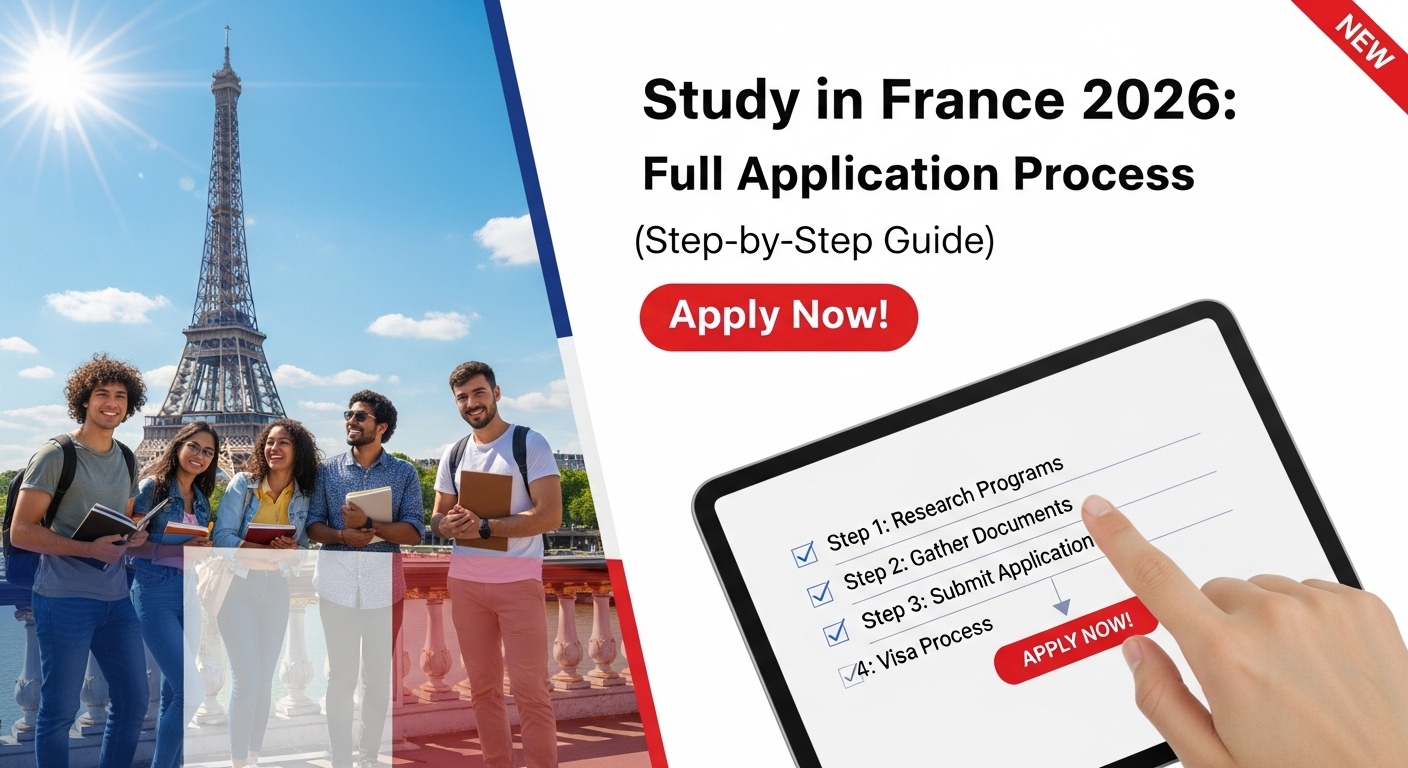
Study in France 2026: The Smart, Affordable Way to Move to Europe 🇫🇷
This is Owafk from Owafk Africa.
Let me ask you something…
What if I told you that you can study in Europe for as low as €363 per year?
Yes — not €10,000.
Not €20,000.
Just a few hundred euros.
Sounds unreal?
Welcome to France.
While everyone is rushing to the UK and Canada, smart applicants are quietly choosing France — and saving thousands while getting a world-class education.
In this guide, I’ll walk you through:
✔ The full step-by-step application process
✔ Tuition fees and cost breakdown
✔ Requirements (with or without IELTS)
✔ Visa process
✔ And how to apply by yourself (no agents)
If you’re serious about studying abroad in 2026, read this carefully.
🇫🇷 Why Study in France?
Let’s start with the truth.
France is not just about the Eiffel Tower or fashion.
It is one of the top education destinations in the world.
🎯 Key Benefits
✔ Very low tuition in public universities
✔ Globally recognized degrees
✔ No strict IELTS requirement in many schools
✔ Work opportunities during studies
✔ Pathway to stay after graduation
💰 Tuition Fees in France (2026)
Here’s the part that surprises everyone.
Public Universities
✔ Bachelor’s: ~€170 – €400
✔ Master’s: ~€243 – €500
Some international programs go up to €3,000+
Private Universities
✔ €3,000 – €10,000 per year
💡 Simple Analogy
Studying in France is like:
👉 Buying a premium phone at a discounted price.
Same quality. Lower cost.
🌐 Do You Need IELTS to Study in France?
👉 Not always.
Many universities in France:
✔ Accept English proficiency letters
✔ Conduct interviews instead
✔ Offer internal English tests
When IELTS May Be Required
• Some competitive programs
• Certain universities
• Visa situations
💡 Pro Tip
If your previous education was in English:
👉 You can request a Medium of Instruction (MOI) letter.
This can replace IELTS in many cases.
🎓 Types of Programs Available
France offers:
✔ Bachelor’s degrees
✔ Master’s degrees
✔ PhD programs
✔ Short courses
✔ Business schools
Many programs are taught in English.
🧾 Requirements to Study in France
Prepare these documents:
✔ International Passport
✔ WAEC / High School Certificate
✔ Bachelor’s Degree (for Master’s)
✔ Academic Transcripts
✔ CV
✔ Motivation Letter
✔ Recommendation Letters (sometimes)
✔ English proof (IELTS or MOI)
🧭 Step-by-Step: How to Apply to Study in France
This is where everything becomes clear.
Let’s break it down step by step.
🔹 Step 1: Choose Your Program
Start by selecting:
✔ Course
✔ University
✔ City
Popular cities include:
• Paris
• Lyon
• Toulouse
• Marseille
🔹 Step 2: Apply Through the Official Portal
Most students apply through:
👉 Campus France
This is the official platform for international students.
🔹 Step 3: Create an Account
On Campus France:
✔ Fill in your details
✔ Upload documents
✔ Choose programs
🔹 Step 4: Submit Your Application
Upload:
• Academic documents
• CV
• Motivation letter
Then submit.
🔹 Step 5: Attend Interview (If Required)
Some applicants are invited for:
✔ Campus France interview
This checks:
• Your study plan
• Your intentions
🔹 Step 6: Receive Admission Letter
If accepted:
✔ You get an offer letter
🔹 Step 7: Pay Tuition Deposit
Some schools require:
✔ Initial payment
🔹 Step 8: Apply for Student Visa
Apply through:
👉 French Embassy / VFS
Submit:
• Admission letter
• Financial proof
• Accommodation proof
🔹 Step 9: Biometrics & Visa Decision
✔ Fingerprints
✔ Interview (if required)
🔹 Step 10: Travel to France
Once approved:
✔ Book your flight
✔ Move to France
✔ Start your studies
🏠 Cost of Living in France
Let’s be realistic.
Even though tuition is cheap, living costs matter.
Average Monthly Expenses
✔ €600 – €1,200 depending on city
Ways to Reduce Costs
✔ Student housing
✔ Part-time jobs
✔ Shared apartments
💼 Can You Work While Studying?
Yes.
International students can:
✔ Work up to 20 hours per week
This helps cover:
• Food
• Transport
• Personal expenses
👨👩👧 Can You Move With Family?
For students:
👉 It’s limited at the beginning.
But after:
✔ Graduation
✔ Job contract
You can bring your family.
📈 Can You Stay After Graduation?
Yes — this is one of the best parts.
France allows:
✔ Post-study stay
✔ Job search opportunities
✔ Transition to work visa
⚠️ Common Mistakes to Avoid
❌ Waiting too late to apply
❌ Submitting incomplete documents
❌ Using fake agents
❌ Ignoring Campus France process
🧠 Real Insight
Most people ignore France because:
👉 They think it’s “too complicated”
👉 Or “only for French speakers”
But the truth is:
👉 It’s one of the easiest and cheapest pathways to Europe.
🎯 Final Advice from Owafk
Let me talk to you directly.
If you want:
✔ Affordable education
✔ European exposure
✔ Legal pathway abroad
Then France should be on your list.
Don’t overthink it.
Don’t wait too long.
Start your application today.