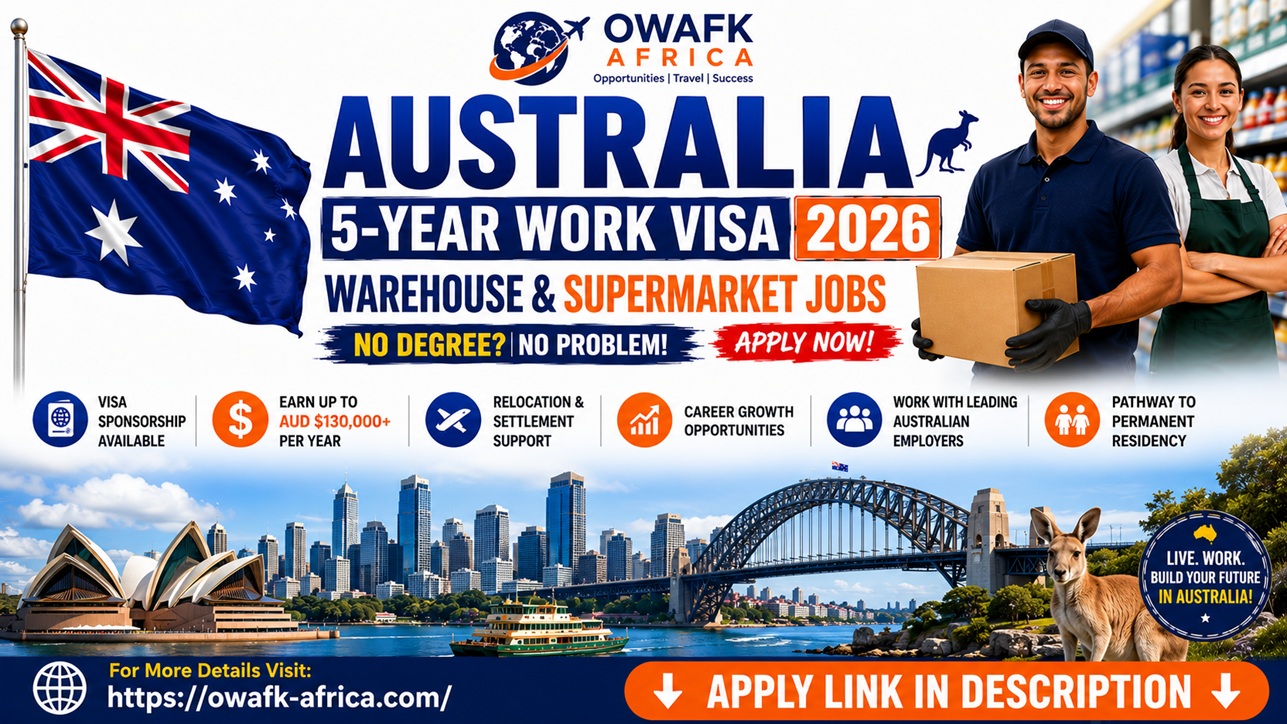
Have you ever imagined working in Australia, earning a competitive income, enjoying a high standard of living, and building a better future for your family?
For many people around the world, Australia represents more than just a destination—it represents opportunity.
While many believe Australia only recruits doctors, engineers, or highly qualified professionals, the reality is much broader. Thousands of businesses rely on workers in warehouses, supermarkets, logistics centres, distribution hubs, and supply chains to keep the country’s economy running.
If you’re looking for practical employment opportunities in Australia, this guide explains the types of jobs available, visa pathways, where to find legitimate vacancies, and how to improve your chances of getting hired.
Why Australia Needs Warehouse and Logistics Workers
Australia has experienced sustained demand for workers across the logistics and retail sectors due to population growth, expanding e-commerce, and increasing consumer demand.
Every day, businesses require employees to:
As supply chains continue to grow, employers regularly recruit both local and, where eligible, international workers.
Popular Warehouse and Supermarket Jobs
Many entry-level and skilled positions are available across Australia.
Common roles include:
Warehouse Picker and Packer
Responsible for selecting products, preparing customer orders, and packaging goods for shipment.
Storeperson
Receives, stores, and organizes inventory within warehouses or retail stores.
Forklift Operator
Moves pallets and heavy goods safely around warehouses using licensed equipment.
Inventory Assistant
Monitors stock levels, updates inventory systems, and assists with stock audits.
Dispatch Officer
Coordinates outgoing deliveries and prepares shipping documentation.
Packaging Operator
Works in manufacturing or food processing facilities to package finished products.
Cold Storage Worker
Handles refrigerated and frozen products while following strict safety procedures.
Delivery Distribution Assistant
Supports logistics teams responsible for sorting and dispatching parcels.
Skills Employers Value
Many employers place greater emphasis on practical workplace skills than on formal qualifications.
Important qualities include:
Having previous warehouse experience or a forklift licence can make your application more competitive.
Where to Find Genuine Jobs
Always search for vacancies through trusted employment platforms and official company websites.
Popular Australian job websites include:
You should also check employer career pages directly, especially if you’re interested in large retail and logistics companies.
Consider Regional Australia
Many job seekers focus only on Sydney or Melbourne.
However, regional Australia often offers:
Depending on your occupation and circumstances, working in a regional area may provide additional immigration benefits under Australian migration programs.
Understanding Australia’s Work Visa Options
Australia offers several legal pathways for foreign workers.
The most suitable visa depends on your occupation, qualifications, employer, and individual circumstances.
Employer-Sponsored Visas
Some Australian employers can sponsor eligible overseas workers when they cannot fill vacancies locally.
Applicants generally need:
Regional Skilled Migration
Australia also encourages skilled workers to settle in regional communities through various migration programs.
Some regional visas may provide pathways to permanent residence if all eligibility conditions are met.
Regional Employer Sponsorship
Businesses located in designated regional areas may sponsor qualified workers where labour shortages exist.
These opportunities can sometimes attract fewer applicants than jobs in major cities.
Always check the latest requirements on the Australian Government Department of Home Affairs website before applying.
Do You Need a University Degree?
Not necessarily.
Many warehouse, retail, and logistics roles do not require a university qualification.
Employers often prioritise:
Some employers also provide structured on-the-job training for suitable candidates.
English Language Requirements
You do not need perfect English to apply for many entry-level positions.
However, workers should be able to:
Improving your English skills can significantly increase your career opportunities over time.
Salary Expectations
Warehouse and logistics salaries vary depending on:
Some employers also provide additional payments for:
Always review your employment contract carefully before accepting any offer.
Major Australian Employers
Some of Australia’s largest employers regularly advertise vacancies throughout the year.
Examples include:
Vacancies should always be verified through each company’s official careers website.
How to Build a Strong Australian CV
A well-prepared CV can greatly improve your chances of being shortlisted.
Your CV should:
If applicable, include experience in:
Tailor every application to match the specific job advertisement.
Documents to Prepare
Having your documents ready allows you to respond quickly when opportunities arise.
Common documents include:
Common Mistakes to Avoid
Many applicants reduce their chances by making avoidable mistakes.
Avoid:
Finding international employment often requires patience and persistence.
A Smart Career Strategy
Many successful migrants begin with an entry-level position before progressing to higher-paying roles.
Starting in warehouse or logistics work can help you:
For many workers, the first job becomes the foundation for future career growth.
🇦🇺 Official Australian Government Resources
💼 Popular Australian Job Websites
🏢 Major Employer Career Pages
📄 Helpful Resources
Frequently Asked Questions
Can foreigners apply for warehouse jobs in Australia?
Yes, provided they have the appropriate work rights or qualify for a relevant Australian work visa.
Do I need previous warehouse experience?
Not always. Some employers provide training, although previous experience can strengthen your application.
Is a forklift licence required?
Only for forklift operator roles. Other warehouse positions usually do not require one.
Can these jobs lead to permanent residence?
Some employer-sponsored and regional migration pathways may provide routes toward permanent residence if all legal requirements are met.
Where should I apply?
Always use official company careers pages or trusted Australian employment websites.
Official Resources
Final Thoughts
Australia continues to offer employment opportunities across warehousing, logistics, retail, and supply chain operations. While competition can be strong, applicants who prepare thoroughly, develop relevant skills, and apply through legitimate channels stand a much better chance of success.
Focus on building a professional CV, improving your communication skills, researching employers carefully, and following official immigration pathways. Every application brings you one step closer to achieving your goal of working and building a future in Australia.